
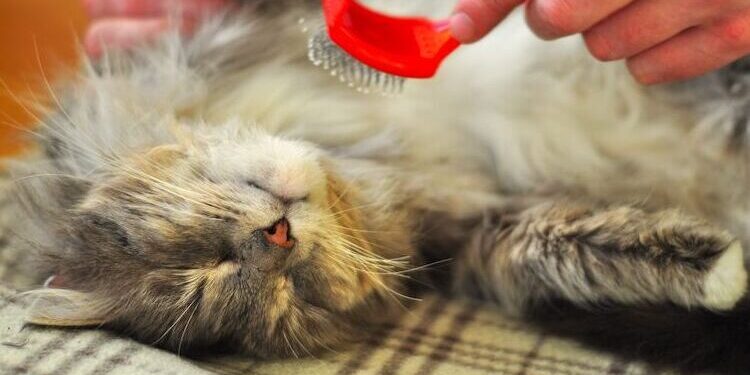
 When we acquire a long-haired cat, we also agree to become an expert cat groomer. A long-haired cat companion needs our help with coat maintenance to keep it glossy, reduce hairballs, and promote a calm, content demeanor. A routine of regular grooming sessions reduces the chance of a long-haired cat developing fur-related behavior problems. This article is meant to provide you with useful tips for long-haired cat care.
The Grooming Session
If you are lucky enough to know your cat from kittenhood, start teaching your cat a grooming routine as soon as you can. It is easier to convince a cat not to fear the brush or the comb when you start young. Daily brushing is ideal to catch loose hair before it tangles, though if that is not possible, aim for at least three to four sessions each week. Use appropriate tools — a wide-toothed comb or detangling rake for the undercoat, a slicker brush for surface shedding, and a fine metal comb to find small mats — and always work gently, holding hair at the base to avoid pulling. Keep sessions short and positive, with treats and soft praise so your cat learns to enjoy the attention.
Mats and tangles should be addressed early. To remove small knots, you can use a little water or an unscented detangling spray along with patient combing. Don’t pull at the mats, as that will only cause your cat pain. Stubborn mats near the skin are best loosened gradually with your fingers, a small pair of grooming scissors, or a mat splitter. Anything large or painful should be left to a professional groomer or veterinarian to remove safely.
 Bathing, Fish Oil, and Parasite Prevention
Bathing is rarely necessary unless the coat becomes dirty or oily. If you do decide to bathe your cat, use lukewarm water and a cat-formulated shampoo, towel-dry thoroughly, and, if your cat tolerates it, finish with a low-heat pet dryer to stop damp fur from matting. Expect seasonal surges in shedding during spring and autumn. Increase brushing around that time and make sure you remove the dead undercoat.
What your cat eats shows in its coat. A balanced diet with good levels of omega fatty acids and proper hydration supports skin and fur health. Fish oil prevents the buildup of dandruff and dead skin cells. In longhaired cats, mats often form around dandruff, so reducing the buildup, if you can, is important. Fish oil also supports healthy kidney function and joint health, so it is a good idea to consult a specialist about the best food for your long-haired cat.
Pests are always annoying, but fleas and mites are a particular problem for long-haired cats. Flea and mite infestations in long fur are harder to remove, so make sure you keep parasite prevention current. In long-haired cats, fleas and mites often damage the coat and provoke more excessive scratching, thereby causing your cat significant distress. Flea and mite-related skin discomfort can turn into stubborn rashes or other long-term skin issues. Humans can drag fleas and mites into the house from the outdoors unknowingly, so this advice would apply to strictly indoor cats, too.
 Mat Prevention
Many owners find it helpful to trim problem areas on the cat’s body, especially the armpits, belly, and rear, to prevent recurring mats and to maintain hygiene. Keeping the rear trimmed or clipped can be more sanitary and assist your cat’s own grooming efforts. Similarly, it is a good idea to gently clean eyes and ears if fur traps discharge, and to trim nails regularly to make grooming sessions more comfortable. Dental care helps prevent drooling that soils facial fur and traps food in the long chin hair. For severe matting, haircuts, difficult baths, or a full de-shed, schedule professional grooming. Groomers can safely clip, shave, and perform sanitary trims.
Finally, make grooming a gentle ritual rather than a chore. If possible, start with brief, pleasant sessions from kittenhood, use calm voices and rewards, and build trust gradually. If you are forced to shave your cat due to severe matting, don’t wait until the fur grows back to start grooming. Re-introduce your grooming sessions while the fur is still short, using a soft brush. With patience, consistency, and the right care, long-haired cats stay healthier, more comfortable, and even more affectionate — and grooming becomes a quiet way to deepen your bond. Caring for a long-haired cat should be a labor of love for everyone involved.
Warning: If you use a detangling spray, only use unscented brands. Perfume in any form is bad for cats and can cause all sorts of health problems. Remember your cat’s licking behavior. Anything you put on your cat’s coat will eventually be ingested!
Final point: Don’t ignore mats in your cat’s coat, even if your cat seems fine! Unlike dogs, cats are notorious for hiding their pain and discomfort from us, but mats are extremely painful. Imagine all the short hairs on your body being constantly twisted. That is what cats with severe matting feel every time they try to move. Untreated mats will lead to cat depression, lethargy, and diminished quality of life.